China Focus: China's world natural heritage site boosts protection for rare golden monkeys

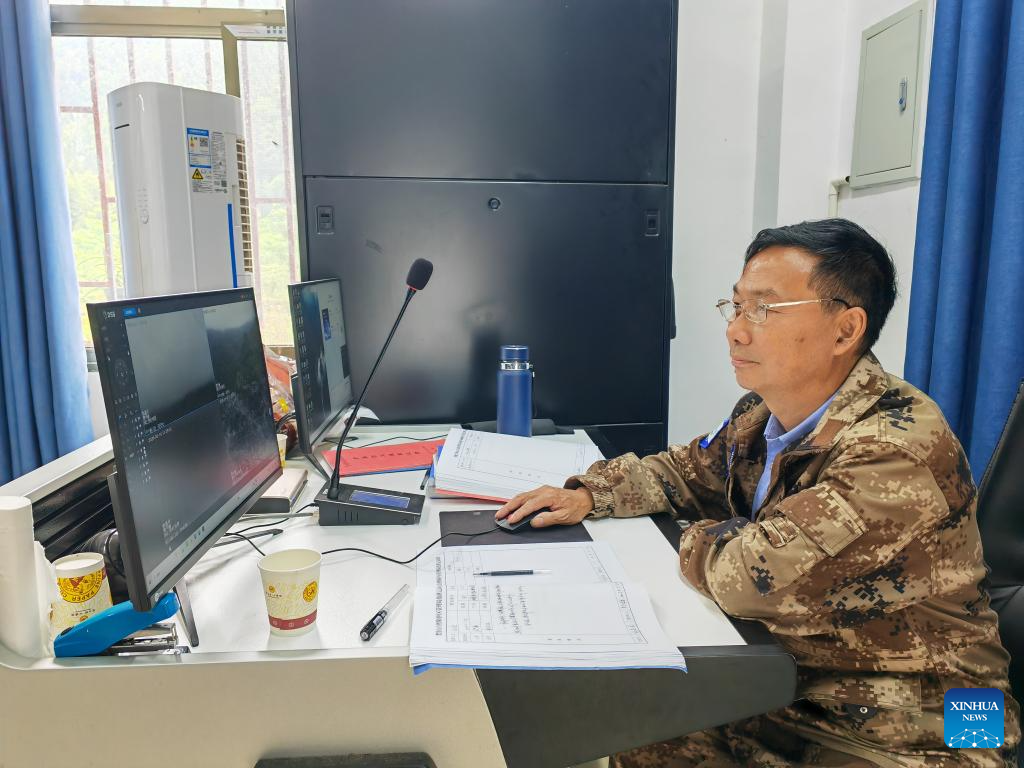
Li Jiuhua, a 62-year-old forest ranger, works at a station of the Fanjingshan National Nature Reserve in southwest China's Guizhou Province, May 14, 2026.(Xinhua/Wu Si)
GUIYANG, May 25 (Xinhua) -- Deep in the misty Mount Fanjingshan in southwest China's Guizhou Province, Yang Wei, a young veterinarian, has spent six years communicating with one of the world's rarest primates, the Guizhou snub-nosed monkeys, growing very close to these mysterious creatures.
Also known as the Guizhou golden monkey for its glittering fur, the Guizhou snub-nosed monkey is a national first-class protected wild animal and is listed as critically endangered by the International Union for Conservation of Nature, with all of its wild population living on Mount Fanjingshan, a UNESCO World Natural Heritage site.
Supported by technology-driven conservation projects and dedicated minds like Yang, the local administration is ramping up efforts to protect the endangered forest residents, realizing China's commitment to harmonious human-nature coexistence in its fast-developing province.
Yang said only around 850 of the Guizhou snub-nosed monkeys are roaming in the mountains. Having grown up in Songtao Miao Autonomous County on the edge of the monkeys' mountainous home, Yang found that his curiosity and responsibility towards the endangered neighbors grew during his years studying veterinary medicine.
After receiving his master's degree at Guizhou University, Yang returned home in 2020 to help save the monkeys, and now works as head of the Guizhou snub-nosed monkey research center of the Fanjingshan National Nature Reserve Administration.
"I want to do something to protect such an elegant and precious species in my hometown," he said.
At the research center, a crucial part of Yang's job was redesigning enclosures for rescued monkeys -- this is to mimic their natural habitat, thus increasing the survival rate of rescued wild monkeys.
With six years of experience and optimization, his approach has yielded inspiring results: every rescued monkey brought to the enclosures for care has survived.
Based on his initial success, Yang and his team ventured further to improve the diet and caring services for pregnant monkeys, thereby improving their health condition and shortening the breeding cycle.
Yang said that in the wild, female monkeys usually give birth once every three years. At the center, with scientific caring programs, they can give birth to robust babies every two years, and there are now four rescued and five center-born monkeys living in the facility, he added.
But the real challenge is monitoring and protecting snub-nosed monkeys in the wild, an area in which China's evolving technologies can help Yang and his colleagues.
According to Yang, the administration has installed seven video surveillance systems in the monkeys' core activity region, along with dozens of infrared cameras along fixed patrol routes.
Drones and ground patrols were also applied to fill the gaps between these areas, providing for detailed records of their living conditions and discouraging possible poachers.
Outside the forest, 14 ecological corridors have been built along the road that circles the mountain. These passages separate human traffic from monkey migration routes, allowing the animals to move safely among feeding sites and sleeping areas.
These installations have facilitated increases in the activities of the wild snub-nosed monkeys. At the Maxi'ao corridor in Songtao County, where the monkeys prefer to stay, infrared cameras have captured groups of monkeys dangling in the trees.
"We planted trees and shrubs that they like to eat along the corridors, now large groups are using them -- that means they are adapting to our modifications," Yang said.
Li Jiuhua, a 62-year-old forest ranger on Mount Fanjingshan, said he has seen a comeback of the snub-nosed monkeys and other wild animals over the past few years.
"Sometimes I saw several monkey groups in a single day," he said, adding that he has also spotted rare birds including the red pheasant.
With scientific plans and optimizing conservation facilities, Li said he's optimistic about seeing "trees full of relaxing monkeys" in the near future.
On the national scope, China is supporting more conservation projects, like in Fanjingshan, to safeguard biodiversity and promote an eco-friendly development model.
During the 14th Five-Year Plan period alone, the country implemented 24,000 ecological and environmental treatment projects, and will continue to plan and carry out a raft of high-standard flagship projects to further support ecological and environmental progress in the 15th Five-Year Plan period (2026-2030), said Sun Shouliang, an official with the Ministry of Ecology and Environment.
Back in Mount Fanjingshan, the local government has invested more than 46 million yuan (about 6.73 million U.S. dollars) in a new conservation center for the monkeys, which includes 15 enclosures, an animal hospital, a laboratory and storage for food preparation, and has started trial operations in April 2026.
Yang Ni, deputy director of the nature reserve's administration, said that the new facility will focus on the breeding, research and education of the monkeys.
"We want to bring in more experts, train local staff and share our work with the world," she added. ■
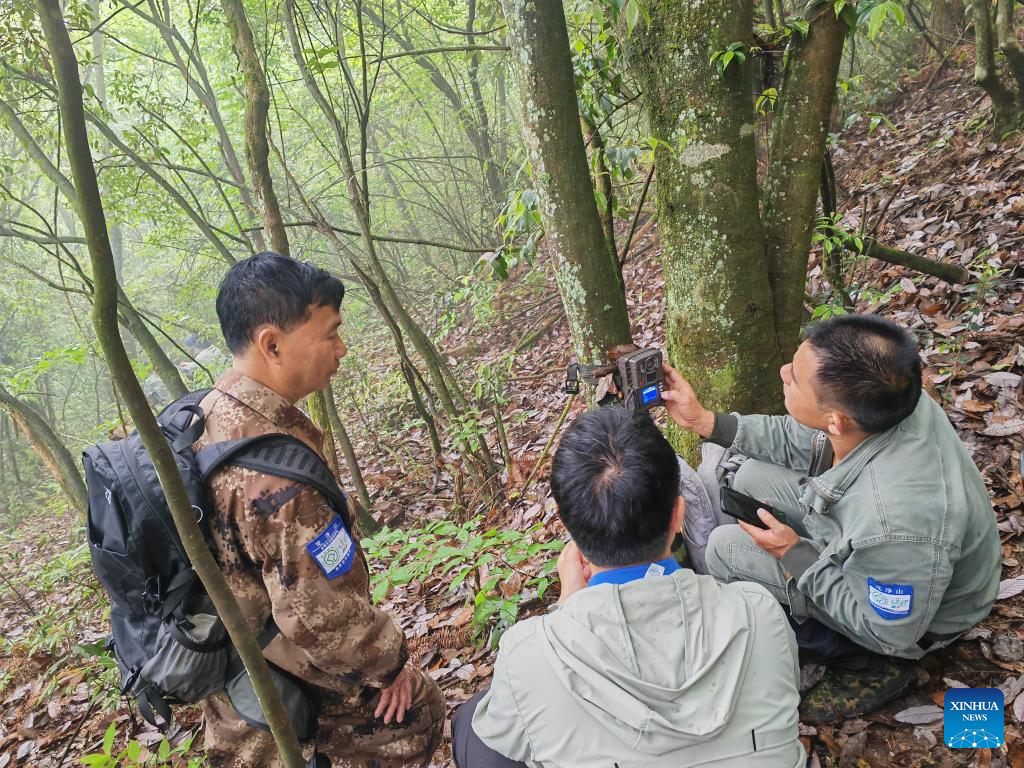
Rangers calibrate infrared cameras at the Fanjingshan National Nature Reserve in southwest China's Guizhou Province, May 14, 2026.(Xinhua/Wu Si)
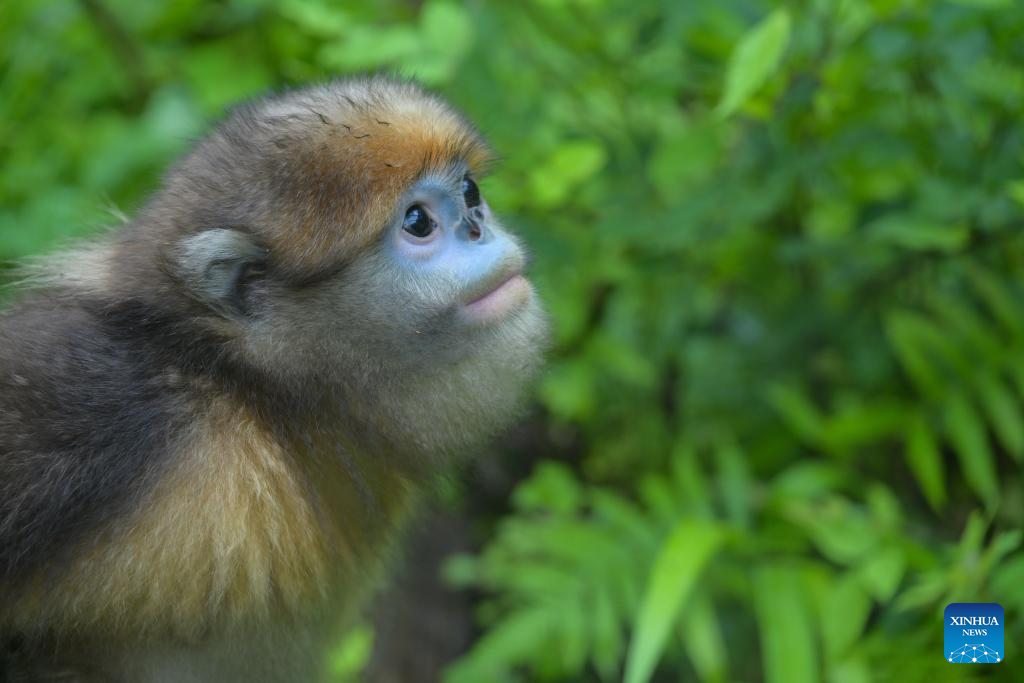
A Guizhou snub-nosed monkey is pictured at a research center for such monkeys of the Fanjingshan National Nature Reserve in southwest China's Guizhou Province, May 28, 2025.(Photo by Li He/Xinhua)
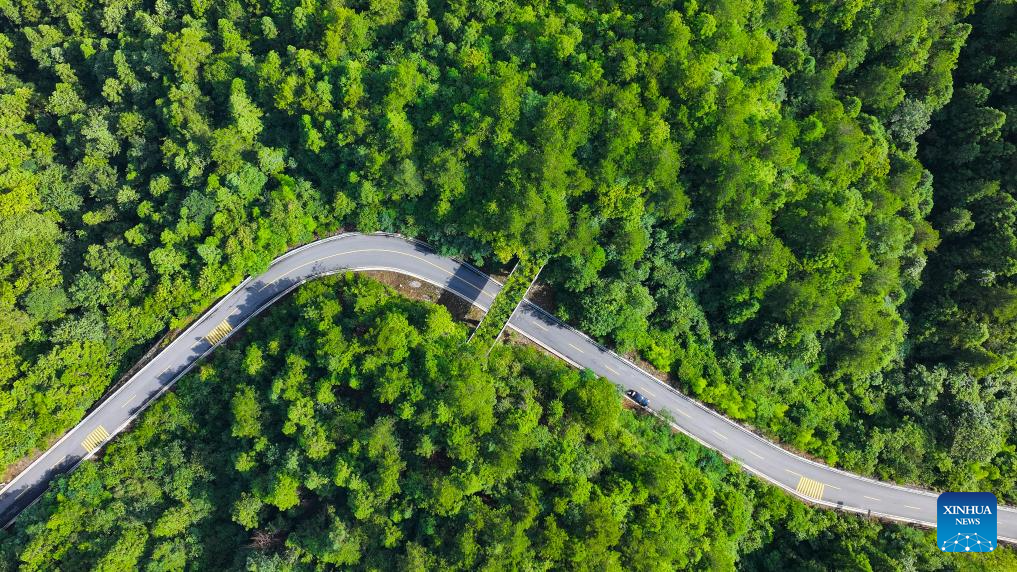
An aerial drone photo taken on July 30, 2025 shows an ecological corridor in the Fanjingshan National Nature Reserve in southwest China's Guizhou Province.(Photo by Li He/Xinhua)


