Sports Focus: China's grassroots leagues kick sports economy into high gear

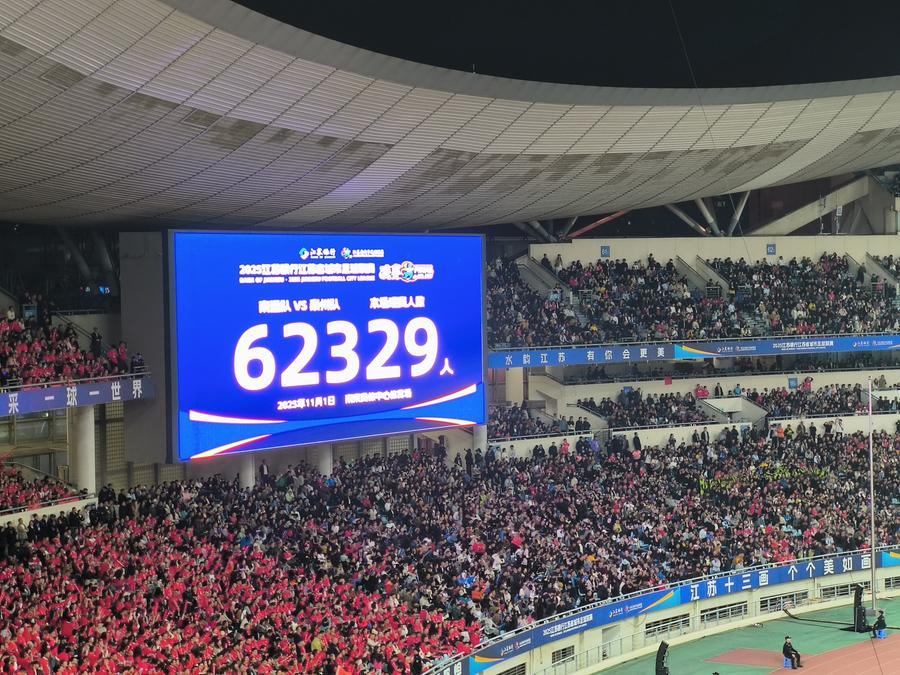
Football city leagues are sweeping China, not only reflecting local pride and sparking stadium fervor, but also serving as a powerful new driver of consumption.
by sportswriter He Leijing
BEIJING, March 29 (Xinhua) -- Amateur football leagues are exploding in popularity across China, turning ordinary players into hometown heroes and transforming weekend matches into citywide celebrations.
During this year's "two sessions" - the annual meetings of China's top legislature and political advisory body - the country's booming grassroots football leagues emerged as a lively topic of discussion. National lawmakers and political advisers said the phenomenon reflects not only the simple joy of sport being rediscovered among the masses, but also a powerful new driver of consumption.
With the FIFA World Cup set to ignite global football fever this summer, China's own "grassroots World Cups" are set to warm up the crowd, stoking local pride, stadium fervor and economic buzz.
FOOTBALL FRENZY
The second season of the wildly popular Su Super League, an amateur tournament featuring 13 teams representing cities across east China's Jiangsu Province, will kick off in April.
The competition exploded onto the national scene last year. Across the season, total stadium attendance surpassed 2.43 million, averaging more than 28,000 spectators per match. More fans followed the action online, where the matches generated over 2.2 billion streams.
Despite its players being ordinary people like schoolchildren, teachers and office workers, the league attracted more attention than some professional competitions.
"The Su Super League grew out of grassroots sport," said Jiang Pengju, a member of the Chinese People's Political Consultative Conference (CPPCC) National Committee. "The players compete with passion, chasing dreams and community honor."
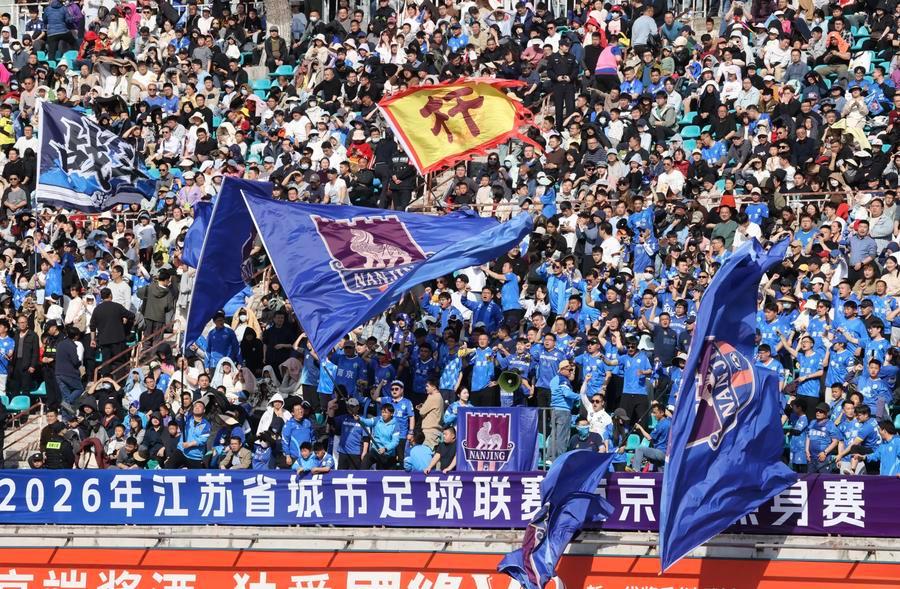
Shui Qingxia, former head coach of the China women's national football team, said she made a point of experiencing the atmosphere firsthand.
"I went to the stadium, queued up to buy souvenirs and fully immersed myself in the fan culture," she recalled. "The charm of sport goes beyond the scoreline. People travel across cities not merely for the matches, but to soak in the shared atmosphere, a sense of belonging and celebration that has become a lifestyle experience in itself."
The enthusiasm has generated a powerful economic ripple effect.
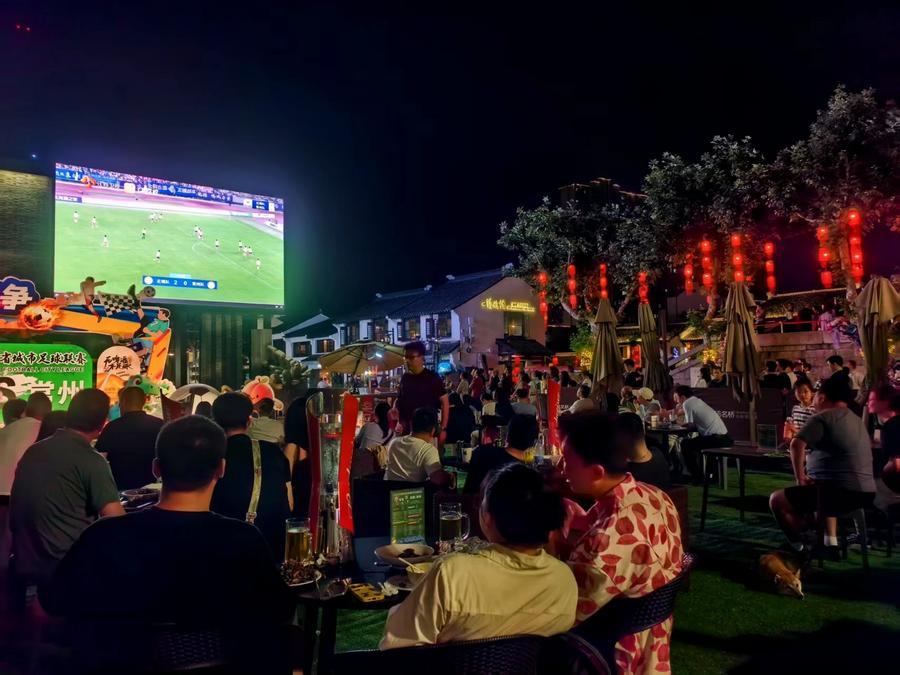
Large public viewing zones have sprung up across cities, where fans watch games while dining with friends. Tourist attractions swell with visitors following the league's traveling crowds. "Sport is linking culture, tourism and business together," Jiang said.
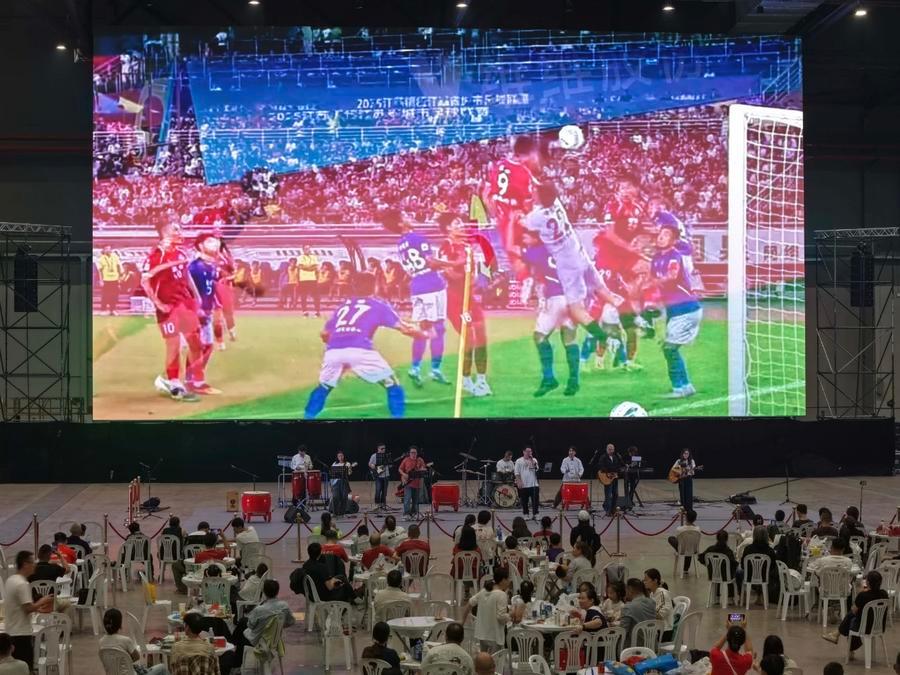
Official data show that during match periods, major retailers and supermarkets in Jiangsu reported 11.64 billion yuan (1.7 billion U.S. dollars) in sales, up 34.7 percent year-on-year, while foot traffic rose 31.2 percent.
Across the country, more than a dozen similar amateur leagues, often dubbed "city super leagues," have emerged or are in the pipeline.
The Gan Super League in east China's Jiangxi Province drew more than 1.23 million spectators across 66 matches last year.
"After the matches, people stroll through night markets, eat crayfish and stay in hotels," said Xu Shixiao, a deputy to the National People's Congress and Olympic canoeing gold medalist from Jiangxi. "One match can light up the night markets, boost incomes and warms the community."
Another new entrant, the Northeast Super League, will debut in May, jointly organized by sports authorities from Liaoning, Jilin, Heilongjiang and Inner Mongolia, with eight city teams set to compete.
Among those joining the excitement is Wang Xindi, the Olympic freestyle skiing men's aerials champion at Milan-Cortina 2026, as he announced that he would play for the Shenyang team.
"It's a great platform for everyone who loves football," Wang said.
FUELING SPORTS CONSUMPTION
Commercial interest has followed the leagues' meteoric rise. The new season of the Su Super League has already secured sponsorship deals with international brands including Adidas and Coca-Cola, with total sponsorship revenue expected to exceed 100 million yuan.
The Jiangsu provincial government has also identified the upcoming competition as a key lever to stimulate tourism and consumer spending.
"Using sporting events to integrate culture, tourism, commerce and fitness consumption - the Su Super League has provided a vivid example," said Wang Chengbin, a CPPCC National Committee member. "Such investment in people-centered experiences can create fresh opportunities for the modern service industries."
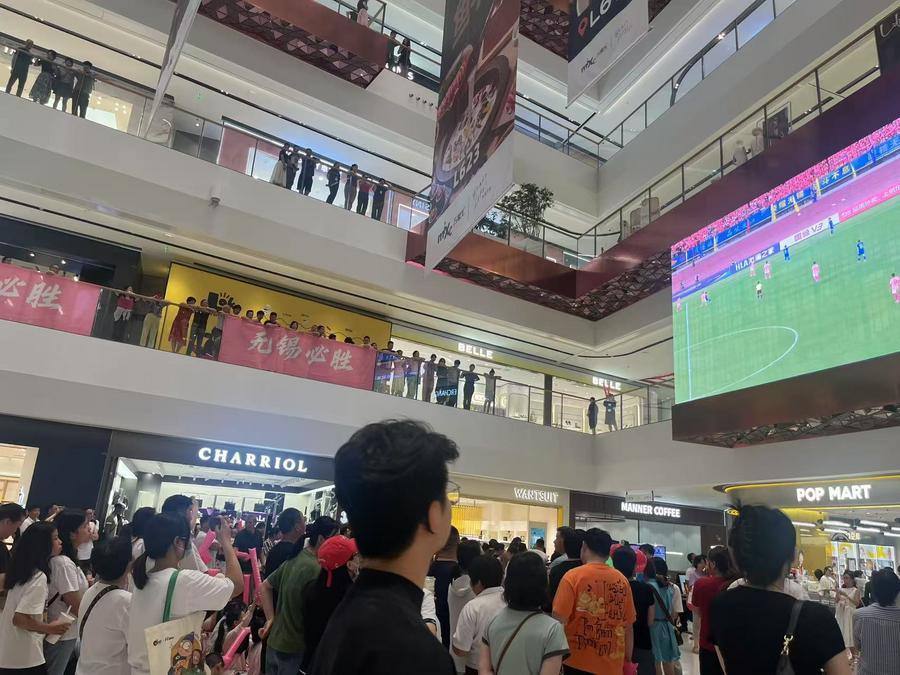
Boosting consumption is a priority in China's economic agenda this year. The government work report calls for unlocking spending potential in culture and tourism, sports events and wellness industries, while actively developing the event economy, winter sports and outdoor sports. It also pledges to expand community sports facilities and foster more distinctive grassroots sporting events.
Sports are emerging as a new engine of growth. During China's 14th Five-Year Plan (2021-2025) period, the total scale of the sports industry and its added value have grown at average annual rates of 8.8 percent and 10.5 percent, respectively.
According to Gao Zhidan, director of the General Administration of Sport of China, 38.5 percent of the population participated in regular physical exercise in 2025. Average annual sports consumption among residents aged 19 to 59 reached nearly 2,500 yuan, up 38 percent from 2020.
"The explosive popularity of events like the Su Super League vividly demonstrates the resilience and enormous potential of China's sports industry and sports consumption," Gao said.
Experts suggested that sustainable growth also requires thoughtful planning. Bao Mingxiao, a professor at Beijing Sport University and a CPPCC National Committee member, noted that while city leagues are flourishing, each region should develop competition systems suited to its own conditions.
"Traditionally, most competition systems were designed mainly for athlete development," he said. "In the future, systems that support the event economy should be oriented more toward the masses."
Official figures show China's sports industry surpassed five trillion yuan in total value in 2025. Government policy aims to further unlock sports consumption, with the sector projected to exceed seven trillion yuan by 2030.
"The development space and market potential of the sports industry are enormous," Gao said. "We will seize the momentum, advance policies for the event economy and outdoor sports industries, and integrate sports more deeply into the experience economy." ■







Comments